Oral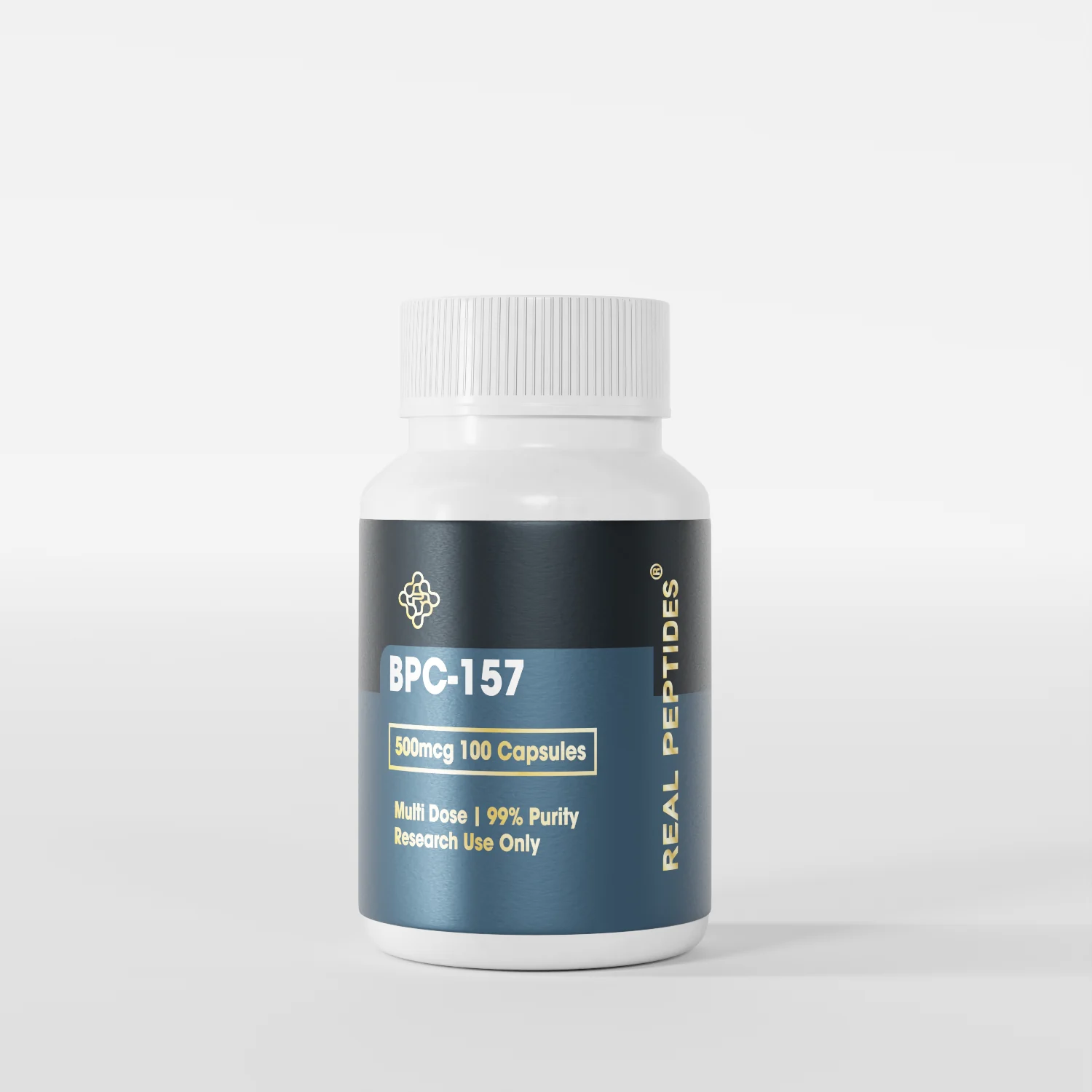
Independent guide to oral BPC-157 capsules
BPC 157 capsules dosage: why no approved human dose exists, why animal study amounts do not translate, and why forum protocols are only anecdotes.
As of November 2026 there is no FDA-approved human dose of BPC-157 in any form, because BPC-157 is not an approved drug. Anyone searching for a bpc 157 capsules dosage will find numbers online, but none of them come from a controlled human trial, and this page will not add another one.
What can be done, however, is an explanation concerning why there is no dose, where those figures come from, and information regarding what a capsule label does convey. BPC-157 is marketed for research purposes and shouldn’t be used for human consumption.
No regulatory body has established a human dosage for BPC-157 capsules or any other BPC-157 product. A dose for a drug is obtained through controlled experiments that determine the efficacy and safety of various dosages, but no such experiments have been conducted.
BPC-157 studies in humans are limited to relatively tiny and uncontrolled studies. Such studies cannot define effectiveness or safety level among patients due to absence of control groups and a small number of patients to observe rare side effects.
That applies to capsules and vials alike. The format changes the price and the route, not the absence of trial data.
In this regard, it must be said that the proper answer to the question "what is the dose" is that the question still has no answer. An article that provides you with a concrete dosage is a statement that is presented as data.
Most BPC-157 research is in rodents, studying tendon, muscle and gut tissue. The amounts used in those studies cannot be translated into a human capsule dose.
The differences between humans and rodents are evident in aspects like metabolism, gut transit, and body size. However, shifting animal data to human dose inevitably requires a trial to verify it. Furthermore, for oral products, the issue becomes more complex as our only infill product directly states lower expected bioavailability when compared with an injection; therefore, the exact fraction that makes it to the bloodstream is unknown.
Our oral BPC-157 guide covers the animal research in more detail.
Most of the numbers associated with BPC-157 "protocols" are purely anecdotal in nature and not grounded in scientific research.
An anecdote does not have any control group, verified product content, or follow-up. Two people who read the same forum post could be taking capsules containing different ingredients from different batches. I think of these posts as a record of what people have done, not as proof that the procedure is effective or safe.
FDA treats dosing guidance on a vendor site as evidence that a product is meant for human use. Its August 24, 2026 warning letters to five online peptide vendors cited dosing guidance and dosing calculators alongside disease claims.
The letters did not include BPC-157 as one of the products. This being said, however, a sourcing company that continues to post capsule dosages is acting similarly. Potential customers should interpret this fact as a negative sign regarding the sourcing company and not as anything meaningful.
The July 23, 2026 advisory committee vote recommending BPC-157 for the 503A bulks list does not change this. It is non-binding, and even if FDA eventually allows compounding, any dosing would be set by a prescriber for a specific patient. See our FDA status page for the full process.
A capsule label tells you what is in the bottle. It does not tell you how much anyone should take.
The stated content is useful for one thing on this site: working out price per mg. That calculation is on our price comparison page.
In the case of compounded prescriptions, a doctor determines the dosage of the medication based on the patient’s intake and medical history assessment. This is the way dosing is implemented for all products that are dispensed through pharmaceutical prescriptions.
BPC-157 cannot currently be compounded, so that route is not open for it. If you are considering any peptide for your own health, talk to your doctor, and read our side effects page for what is and is not known.
As of November 2026 there is no FDA-approved human dose of BPC-157 in any form, because BPC-157 is not an approved drug. Anyone searching for a bpc 157 capsules dosage will find numbers online, but none of them come from a controlled human trial, and this page will not add another one.
What can be done, however, is an explanation concerning why there is no dose, where those figures come from, and information regarding what a capsule label does convey. BPC-157 is marketed for research purposes and shouldn’t be used for human consumption.
No regulatory body has established a human dosage for BPC-157 capsules or any other BPC-157 product. A dose for a drug is obtained through controlled experiments that determine the efficacy and safety of various dosages, but no such experiments have been conducted.
BPC-157 studies in humans are limited to relatively tiny and uncontrolled studies. Such studies cannot define effectiveness or safety level among patients due to absence of control groups and a small number of patients to observe rare side effects.
That applies to capsules and vials alike. The format changes the price and the route, not the absence of trial data.
In this regard, it must be said that the proper answer to the question "what is the dose" is that the question still has no answer. An article that provides you with a concrete dosage is a statement that is presented as data.
Most BPC-157 research is in rodents, studying tendon, muscle and gut tissue. The amounts used in those studies cannot be translated into a human capsule dose.
The differences between humans and rodents are evident in aspects like metabolism, gut transit, and body size. However, shifting animal data to human dose inevitably requires a trial to verify it. Furthermore, for oral products, the issue becomes more complex as our only infill product directly states lower expected bioavailability when compared with an injection; therefore, the exact fraction that makes it to the bloodstream is unknown.
Our oral BPC-157 guide covers the animal research in more detail.
Most of the numbers associated with BPC-157 "protocols" are purely anecdotal in nature and not grounded in scientific research.
An anecdote does not have any control group, verified product content, or follow-up. Two people who read the same forum post could be taking capsules containing different ingredients from different batches. I think of these posts as a record of what people have done, not as proof that the procedure is effective or safe.
FDA treats dosing guidance on a vendor site as evidence that a product is meant for human use. Its August 24, 2026 warning letters to five online peptide vendors cited dosing guidance and dosing calculators alongside disease claims.
The letters did not include BPC-157 as one of the products. This being said, however, a sourcing company that continues to post capsule dosages is acting similarly. Potential customers should interpret this fact as a negative sign regarding the sourcing company and not as anything meaningful.
The July 23, 2026 advisory committee vote recommending BPC-157 for the 503A bulks list does not change this. It is non-binding, and even if FDA eventually allows compounding, any dosing would be set by a prescriber for a specific patient. See our FDA status page for the full process.